Back

Cleft Stick 10 of 2007
IN THIS ISSUE
Environmental NGOs call on government to release strategic national planning reports
Restoring a vast war-ravaged Angolan game reserve
News From Tom Heinecken
Xolobeni Draft Scoping Report
Global Warming “tipping point”
POSITION(s) AVAILABLE

Wildlife presenters needed
Wanted Micro light Pilots in Moyowosi
POSITION(s) WANTED
Training
Tailpiece

Hi again

Herewith, some snippets from various sources.
I appeal to you to send me items to distribute to our members for the Cleft Stick, the Game Ranger magazine and to be posted on the web site. These are your magazine and website, so ensure it gets the news that you would like to see in it.
Please let me have any changes to your physical address, phone no. or e-mail address to keep the database up to date.
Thanks to all of you who have made the effort. Please will any of you who know of members who do not get this “electric” Cleft~Stick, & have access to e-mail, pass their address along to me.

Don Yunnie
7 Chalet Drive, Hilton, 3245, South Africa Local Tel & Fax (033) 343 1534 Int. Tel & Fax (+2733) 343 1534 cell 082 377 7562 E-mail dyunnie@xsinet.co.za.

If you do not wish to receive this e-mail newsletter please send a blank e-mail to me at the above address with the word “unsubscribe C~S ” as the message heading.

Environmental NGOs call on government to release strategic national planning reports

Starts 17 May 2007
RELEASE OF NATIONAL ENVIRONMENTAL OUTLOOK AND NATIONAL FRAMEWORK FOR SUSTAINABLE DEVELOPMENT REPORTS
In 2004 and 2005 the Department of Environmental Affairs and Tourism (DEAT) collaboratively embarked on compiling two very important strategic planning reports, namely, the National Environmental Outlook (NEO), formerly State of Environment Report (NSOER) and the National Framework for Sustainable Development (NFSD), formerly National Strategy for Sustainable Development (NSSD). It is nearly three and two years down the line respectively and neither report has yet been released.

As participants in these processes, and concerned end-users of these reports, we call for their urgent release because:

  1. Both studies represent independent, objective reviews of the opportunities and constraints to growth and development in South Africa posed by our natural resource base – and as such they provide critical information to inform decisions at the local, provincial and national levels, including key overarching national strategies such as ASGISA, the Accelerated Shared Growth Initiative for South Africa, the government’s very ambitious economic growth catalyst. In the absence of these baseline and strategic reports, ASGISA and other development options are being decided upon in a planning vacuum, which assumes that the country’s natural resources are infinite.
  2. South Africa is a country with dire socio-economic imperatives and thus needs this information to be made public now, in order for all levels of governance to be better able to make sound planning decisions, as well as all levels of civil society to have the confidence that the decisions that are being taken are the correct decisions based on sound information to the benefit of all.
  3. Related to this point is the fact that there are a number of social and economic developments and imperatives that are being rolled-out, such as the 2005-15 UN Decade for Education for Sustainable Development, the draft national Biofuels strategy recently released by the Dept. of Minerals and Energy, and numerous infrastructural and agricultural development projects under ASGISA. These strategies and a host of other growth targets are being set without due consideration to environmental opportunities and constraints which are provided by these key documents. As more time passes, these critical planning documents, which comprise up to date foundational information, are being overtaken by these roll-outs.
  4. As civil society, especially the environmental NGOs, we are often unfairly accused of blocking development when we call for fair and due environmental considerations in the EIAs and other decision-making tools. However, it is lack of access to information such as that contained in the two aforementioned reports that often inhibits us, and indeed officials of DEAT, from achieving our reasonable goals.
  5. In fact, the DEAT’s own contract for contributor’s to the NEO states “The project is designed to improve access to relevant, accurate, up-to-date environmental information on the SoE in accordance with Section 31(1)(a) of the National Environmental Management Act (Act No. 107 of 1998).” As participants in this process who are committed to sustainable development, we have accepted the gist of this contract in good faith and have based our expectations on this principle.
  6. The South African government has won international accolades for its environmental policies including the Constitutional right to a healthy environment that safeguards and promotes human well-being. As a country, especially in the southern African and indeed the whole African region we are highly regarded for our environmental laws. Now is the time for the government to perform its duty of safeguarding the tenets of democracy by providing information that enables effective decision making and public participation.

We therefore call for immediate:
a) clarity on where these processes are;
b) reasons for the delay in releasing the documents; and,
c) based on the concerns above, the timelines for release;
d) written commitment to those timelines.
As concerned NGOs we are committed to supporting the activities and principles encapsulated in the documentation under question.
Ends
Issued by:
Dr Nick King, Executive Director: Sustainability, Endangered Wildlife Trust, Tel: +27 11 4861102 Email: nickk@ewt.org.za

Prof Gerhard Verdoorn, Executive Director, BirdLife South Africa, Tel: +27 11 7891122 E-mail: nesher@tiscali.co.za

Dr Bruce Mackenzie, Executive Director, Botanical Society of South Africa, Tel: +27 21 7972090 Email: docbruce@mweb.co.za

Mr Andrew Muir, Executive Director, Wilderness Foundation South Africa, Tel: +27 41 3730293 Email:andrew@sa.wild.org

Ms Mumsie Gumede, Chief Executive, Wildlife and Environment Society of South Africa Tel: +27 33 3303931, Email: Mumsie@wessa.co.za

Dr Rob Little, Acting CEO, WWF South Africa, Tel: +27 21 888 2800, Email: rlittle@wwf.org.za .

Restoring a vast war-ravaged Angolan game reserve

A Durban man has been given the task of restoring a vast war-ravaged Angolan game reserve to its former glory. He told MYRTLE RYAN why he's undaunted

When Roland Goetz, the warden of the Quicama National Park in Angola, leaves the safety of his home turf he's a marked man.

Durban's Goetz, who was appointed to restore the 1m ha (10 000 sq. km.) park to its former glory, is hardly the most popular person with those who have reaped profits from poaching. His drive to stop them plying their trade has won him several enemies.

"I'm a thorn in their side, a marked man," said Goetz, mentioning that he always carried an AK47 and was accompanied by two field rangers whom he could trust. "Life is still very cheap."

Despite this, Goetz - a former Natal Parks Board ranger - said he regarded his job as challenging and worthwhile as it signified the reunification and growth of Angola.

He explained that before the war, Quicama was one of the top parks in Africa, teeming with elephant, roan, eland and red forest buffalo. The intention was to ensure it reclaimed this place.

During the war its close proximity to Luanda had proved to be its downfall. "They built a Cuban air base in the middle of the park, and they machine gunned the animals from helicopters," said Goetz.

Executive Outcomes, a group of South African mercenaries, also used the base for training Angolan government troops.

With peace, the government wanted to restore the park and through Executive Outcomes approached the School of Wildlife Management attached to the University of Pretoria in this regard.

The school's Prof. Wouter van Hoven flew to Angola in 1996 to do a survey. To cut a long story short, the Kissama Foundation was formed to fund the project, Goetz was appointed to his post, and Operation Noah's Ark' saw animals being brought into the country from South Africa and Botswana.

The park was rising like a phoenix from the ashes. To kick-start the reintroduction of the animals about 10 400 ha were fenced off behind 22 kms of fencing. "We flew in 30 elephants, four giraffe, eland, kudu, zebra etc. from Madikwe (game reserve) and the Tuli Block on Ilyushins," explained Goetz.

He compiled a park management report which will ultimately be used in five other national parks.

Speaking about the problems he has to deal with, he mentioned about 9 000 people live within the park, with many displaced persons from other countries living along the coastal areas.

"They grow cassava and maize as subsistence farmers and use slash and burn agriculture, which is a problem. Another is the availability of weapons," he said. People still shot migrating elephants and poached sea turtles, manatees, crocodiles and hippos. The bush meat trade was thriving, while cattle were brought illegally into the park to graze. "They (the herders) put up their own fences."

Habitat destruction and the cutting of mangroves was also a problem. "700 trees were felled and sold as building material in Luanda," said Goetz.

While animals in the northern part (close to Luanda) had been wiped out during the war, the southern area was relatively untouched. Giving some indication of the distances involved, Goetz said it took him five days to reach the southern part and return.

Giving some insight into what he's up against, Goetz spoke about the time when three of his staff - who had been dismissed for stealing fencing - had returned in the evening with 20 youngsters to demand money. Things turned ugly and for three days he remained barricaded with a loaded AK 47 within his house, having piled mattresses around his room as further protection.

Despite such hair-raising tales, and having had malaria four times, he remains upbeat and positive, saying he is slowly replacing his army staffers with people from the local community. He also sets great store by his second in command, Martin Pinto, who has been seconded from the Ministry of the Environment.

While those involved in nature conservation in South Africa might complain about lack of staff, Goetz has to make do with only 18 field rangers to cover 1m ha. In the beginning they had only one land rover.

However, he keeps one thing fixed firmly in his mind. "Not many conservationists have an opportunity to be involved in restoring a national park from scratch," said Goetz.

News From Tom Heinecken

Dear Don,
I err greatly in being so slow to respond to repeated requests for news and views from my neck of the woods here in the Zambian wilderness.
Perhaps Moira Borland who has just been helping me for a few weeks can give an objective and honest opinion on what cooks in this part of the world.
I am not going to make this a long one as three weeks of absence from the keyboard has left me with a list of mails that is frightening.
The main reason for this short note is first of all to apologise to all at the Potberg AGM for not appropriately socializing and sharing experiences with everyone present at that occasion. I hope to someday make up for this.
Secondly to say that receiving an award for the member making the most effort to attend was to say the least very unexpected and I am not sure that I really deserved it. However, the wonderful bottle of wine was given and gratefully accepted. THANK YOU ALL.
There were two ways to enjoy the fruits of this vine - one being to have one "moerreva" party with (GRAA) friends at a suitable location/occasion and the second is what I decided and asked Tim to organize for me. Namely to raffle the "beauty" and put the proceeds (which should be a minimum of R1000-00) into an ear-marked account to subsidize the annual subscriptions of worthy Zambian members which I hope to help start recruiting in the not too distant future.
I have not been in contact yet with Tim to find out if he has managed to take the matter any further, but at least the wine should be improving and increasing in value with maturity.
All for now and cheers until next time.
Tom and Viv
(Kaingu Lodge - Kafue National Park)

Xolobeni Draft Scoping Report

Dear Val,

The Draft Scoping Report will be also be available on the Xolobeni website www.Xolobeni.co.za as from Monday 28 May 2007. Should members of the public still not be able to access the information we could arrange to have a hard copy of the Draft Scoping Report or a CD sent to the members of the public.

Regards,

Trudy Goliath,
Secretary - Environmental Unit, Tel: (011) 803 5726, Fax:(011) 803 5745, trudy@gcs-sa.biz

Global Warming “tipping point”

Dear BIOPLANNERS,

Even on World Environment Day, there is no let up in the avalanche of reports, opinions, and even some actions on climate change.
There has been much use of the term "tipping point" with respect to future, or even current greenhouse gas emissions and I have posted on this previously.

James Hansen has been a leading researcher and spokesperson on climate change for more than 20 years and thinks that we are rapidly approaching a point of no return, where positive feedbacks will make mitigation almost impotent and adaptation that much more difficult.

He now says, based on his latest research that: "With another decade of business-as-usual, it becomes impractical to achieve the alternative scenario because of the energy infrastructure that would be in place."

His latest research is summarised below and appears in the current issue of "Atmospheric Chemistry and Physics." (To download the paper, go to: http://www.atmos-chem-phys.net/7/2287/2007/acp-7-2287-2007.pdf).

The time for talking is rapidly running out.

As one commentator said of the new initiative just announced by the Bush administration: “Give us a press conference to say what you’ve done yesterday,” he said. “Don’t tell us any more what you’re going to do tomorrow.”

Best wishes

David Duthie, UNEP-GEF Biosafety Unit, Geneva, Email: david.duthie @ unep.ch

--- Hansen, J. et al (2007) Dangerous human-made interference with climate: a GISS model E study. Atmos. Chem. Phys., 7, 2287–2312

Abstract. We investigate the issue of “dangerous human made interference with climate” using simulations with GISS model E driven by measured or estimated forcings for 1880–2003 and extended to 2100 for IPCC greenhouse gas scenarios as well as the “alternative” scenario of Hansen and Sato (2004). Identification of “dangerous” effects is partly subjective, but we find evidence that added global warming of more than 1!C above the level in 2000 has effects that may be highly disruptive. The alternative scenario, with peak added forcing "1.5 W/m2 in 2100, keeps further global warming under 1!C if climate sensitivity is "3!C or less for doubled CO2. The alternative scenario keeps mean regional seasonal warming within 2! (standard deviations) of 20th century variability, but other scenarios yield regional changes of 5–10!, i.e. mean conditions outside the range of local experience. We conclude that a CO2 level exceeding about 450 ppm is “dangerous”, but reduction of non-CO2 forcings can provide modest relief on the CO2 constraint. We discuss three specific sub-global topics: Arctic climate change, tropical storm intensification, and ice sheet stability. We suggest that Arctic climate change has been driven as much by pollutants (O3, its precursor CH4, and soot) as by CO2, offering hope that dual efforts to reduce pollutants and slow CO2 growth could minimize Arctic change. Simulated recent ocean warming in the region of Atlantic hurricane formation is comparable to observations, suggesting that greenhouse gases (GHGs) may have contributed to a trend toward greater hurricane intensities. Increasing GHGs cause significant warming in our model in submarine regions of ice shelves and shallow methane hydrates, raising concern about the potential for accelerating sea level rise and future positive feedback from methane release. Growth of non-CO2 forcings has slowed in recent years, but CO2 emissions are now surging well above the alternative scenario. Prompt actions to slow CO2 emissions and decrease non-CO2 forcings are required to achieve the low forcing of the alternative scenario.

--- Earth's Climate Approaches Dangerous Tipping Point

http://www.ens-newswire.com/ens/jun2007/2007-06-01-01.asp

NEW YORK, New York, June 1, 2007 (ENS) - A stern warning that global warming is nearing an irreversible tipping point was issued today by the climate scientist who the Bush administration has tried to muzzle.

James Hansen, director of NASA's Goddard Institute for Space Studies in New York, today published a study showing that greenhouse gases emitted by human activities have brought the Earth’s climate close to critical tipping points, with potentially dangerous consequences for the planet.

"If global emissions of carbon dioxide continue to rise at the rate of the past decade," said Dr. Hansen, "this research shows that there will be disastrous effects, including increasingly rapid sea level rise, increased frequency of droughts and floods, and increased stress on wildlife and plants due to rapidly shifting climate zones."

Tipping points can occur during climate change when the climate reaches a state such that strong amplifying feedbacks are activated by only moderate additional warming.

Dr. Hansen has said in the past that a global tipping point will be reached by 2016 if levels of greenhouse gases like methane and carbon dioxide are not reduced.

This study finds that global warming of 0.6ºC in the past 30 years has been driven mainly by increasing greenhouse gases and only moderate additional climate forcing is likely to set in motion disintegration of the West Antarctic ice sheet and Arctic sea ice.

Amplifying feedbacks include increased absorption of sunlight as melting exposes darker surfaces and speedup of iceberg discharge as the warming ocean melts ice shelves that otherwise inhibit ice flow.

The research appears in the current issue of "Atmospheric Chemistry and Physics." (To download the paper, go to: http://www.atmos-chem-phys.net/7/2287/2007/acp-7-2287-2007.pdf)

In January 2006, Dr. Hansen said that officials at NASA headquarters had ordered the public affairs staff to review his coming lectures, papers, postings on the Goddard website and requests for interviews from journalists.

Dr. Hansen said he would decline to adhere to the restrictions. NASA officials said its scientists were free to discuss science but not policy issues.

In March 2007, Hansen told the House of Representatives Committee on Oversight and Government Reform, "The effect of the filtering of climate change science during the current administration has been to make the reality of climate change less certain than the facts indicate, and to reduce concern about the relation of climate change to human-made greenhouse gas emissions."

From a combination of climate models, satellite data, and paleoclimate records, Hansen and co-author Makiko Sato of Columbia’s Earth Institute, conclude that the West Antarctic ice sheet, Arctic ice cover, and regions providing fresh water sources and species habitat are threatened from continued global warming.

The researchers used data on earlier warm periods in Earth’s history to estimate climate impacts as a function of global temperature,

They used climate models to simulate global warming, and satellite data to verify ongoing changes.

The researchers also investigated what would be needed to avert large climate change, thus helping define practical implications of the United Nations Framework Convention on Climate Change.

That treaty, signed in 1992 by the United States and almost all nations of the world, aims to stabilize atmospheric greenhouse gases "at a level that prevents dangerous human-made interference with the climate system."

Based on climate model studies and the history of the Earth, the Hansen and Sato conclude that additional global warming of about 1ºC (1.8ºF) or more, above global temperature in 2000, is likely to be dangerous.

In turn, the temperature limit has implications for atmospheric carbon dioxide, CO2, which has already increased from the pre-industrial level of 280 parts per million, ppm, to 383 ppm today and is rising by about two ppm per year.

Sato said, "The temperature limit implies that CO2 exceeding 450 ppm is almost surely dangerous, and the ceiling may be even lower."

The study also shows that the reduction of non-carbon dioxide greenhouse gases such as methane and black soot can offset some of the increase in carbon dioxide, but only to a limited extent.

Hansen today urged immediate action to limit climate change. "We probably need a full court press on both CO2 emission rates and non-CO2 forcings, to avoid tipping points and save Arctic sea ice and the West Antarctic ice sheet," he said.

In climate science, radiative forcing is loosely defined as the difference between the incoming radiation energy and the outgoing radiation energy in a given climate system.

A positive forcing, with more incoming energy, tends to warm the system, while a negative forcing, with more outgoing energy, tends to cool it.

A computer model developed by the Goddard Institute was used to simulate climate from 1880 through today. The model included a more comprehensive set of natural and human-made climate forcings than previous studies, including changes in solar radiation, volcanic particles, human-made greenhouse gases, fine particles such as soot, the effect of the particles on clouds and land use.

Extensive evaluation of the model’s ability to simulate climate change is contained in a companion paper to be published in the journal "Climate Dynamics."

The authors use the model for climate simulations of the 21st century using both ‘business-as-usual’ growth of greenhouse gas emissions and an alternative scenario in which emissions decrease slowly in the next few decades and then rapidly to achieve stabilization of atmospheric CO2 amount by the end of the century.

Climate changes are so large with the business-as-usual scenario, that Hansen concludes "business-as-usual would be a guarantee of global and regional disasters."

The business-as-usual scenario specifies additional global warming of 2 to 3ºC (3.6 to 5.4ºF).

But the study finds one-quarter to one-third less severe climate change when greenhouse gas emissions follow the alternative scenario.

"Climate effects may still be substantial in the alternative scenario, but there is a better chance to adapt to the changes and find other ways to further reduce the climate change,” said Sato.

While the scientists say it is still possible to achieve the alternative scenario, they warn that significant actions will be required to do so.

Emissions must begin to slow soon. "With another decade of business-as-usual," says Hansen, "it becomes impractical to achieve the alternative scenario because of the energy infrastructure that would be in place."

Dr. Hansen, 65, is a physicist who joined NASA in 1967. Since the 1970s he has worked on computer simulations of the Earth’s climate in a effort to understand humanity’s impact upon it.

For more about Dr. Hansen's work see:
House Panel Investigates Bush's Climate Science Manipulations http://www.ens-newswire.com/ens/mar2007/2007-03-20-10.asp

Outspoken American Climate Scientist Honored By WWF http://www.ens-newswire.com/ens/nov2006/2006-11-22-01.asp

POSITION(s) WANTED

Wildlife presenters needed

Dear Sir,

I am Chairman and Content Director of a company called WildEarth. We broadcast safaris from the Sabi Sands Game Reserve in South Africa LIVE onto the internet. At the moment I am looking to find a guide who has at least two years of experience in the field to become a presenter for us. I have attached an advert which gives people more of an idea about what we are looking for. If there is anyway that you can publish this advert on your website I would be truly grateful. If not then maybe you could give me some advice as to where I may go to advertise.

Wildlife TV Presenters needed!!

WildEarth is a LIVE TV and Internet channel broadcasting from Djuma Game Reserve in the Sabi Sands, Mpumulanga. We are looking for a presenter that can engage with our global audience on two LIVE safari drives every day.

Applicants must have at least two years of experience as a guide and be confident enough to deliver the best possible wildlife experience every time they go out there. The right person will be able to live for extended periods of time in the bush and be a strong team player.

No previous TV experience is required, but the right personality and a strong urge to entertain is essential. The job commences at the end of July.

Please contact Emily on +27 82 885 2317 or Emily@wildearth.tv

Wanted Micro light Pilots in Moyowosi

Hi There

Some Microlight photos taken over Moyowosi Game Reserve in Far Western Tanzania. We have one based here to combat poaching and to assist the wildlife division of Tanzania with Protected Area Management.

We are planning to place another 4 microlights into the field over the next year and a half. One based per Game Reserve we operate in. We have purchased the 2nd Microlight for Maswa Game Reserve ( Borders onto the Serengeti NP on the SW)
However we are battling to find pilots. Could you please put the word out and ask interested parties to contact me.

The minimum number of hours is 100( Preferably in challenging conditions), must have very good mechanical knowledge of the machine as will be require to service and repair the microlight in the bush. The pilot will be based in a Game Reserve flying daily ( Weather permitting) and communicating directly with anti poaching ground teams.
The pilot needs to be single , bush savvy , be able to live in the field for 3 months at a time and be prepared to fly over very remote areas.

The pilot will move between a number of airstrips in his area linking up and staying with the anti poaching teams or staying in hunting camps.

Any assistance in spreading the word will be most appreciated

All the Best

Keith

POSITIONs (WANTED)

Training
Hi Don,

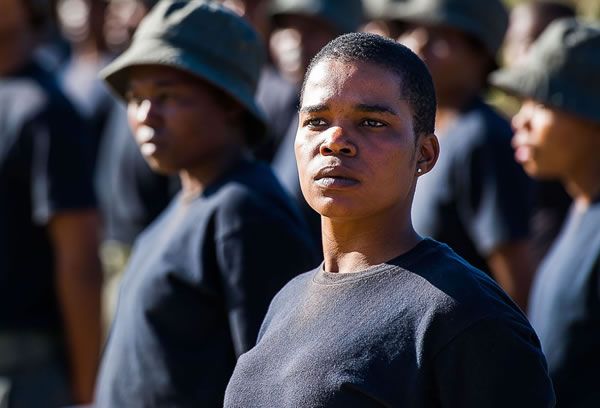
It was great to read the articles in the Cleft Stick 9 of 2007 concerning the Anti Poaching efforts in the Serengeti as well as the Premiere of the Thin Green Line. African Field Ranger Training Services has long been at the forefront of trying to get Administrators to see the absolute necessity of well trained Field Rangers in Protected Areas. We have always considered ourselves to be fortunate in our association with the GRAA as it has led to several training interventions across our beautiful continent and beyond.

African Field Ranger Training Services is proud to be involved in the training of some of the Anti Poaching staff in the Serengeti among some of the Tanzanian wildlife services. In fact there is currently a team of trainers in Tanzania training Field Rangers to perform the Anti Poaching in other reserves as well. These Field Rangers work under extremely difficult circumstances and need all the support they can get!! Thus our elation regarding the findings of researchers that Anti Poaching plays a bigger role than other interventions in Protected Areas.

With such a statement on the table I feel it necessary to indicate that Field Rangers need to be deployed by knowledgeable staff in order to ensure safe and effective operations. Losses amongst Field Ranger staff in places like the Democratic Republic of the Congo is not acceptable and the indicators are that a lack of training and commitment from Field Leaders are but one of the shortcomings in this critical task.

Protected Area Managers should be making themselves available for training more regularly and not only see to the training of their Field Rangers. The effect of Protected Area Managers working with Field Rangers on operations is well known to be extremely positive and ensures that the morale of Field Rangers is maintained. Leading from the front is a necessity in effective Conservation Operations.

Information regarding this type of training is available and offered by African Field Ranger Training Services. We would appreciate the opportunity to get involved in the development of Field Rangers and Protected Area Managers alike. Our contact details are as follows:
Ruben de Kock, Martin Mthembu, Marianne de Kock

afrts@megaweb.co.za
jmdekock@megaweb.co.za
martin@afrts.co.za

Tel: +27 13 741 1554
Cell: +27 82 905 3271 (Ruben de Kock)
Cell: + 27 84 702 0834 (Marianne de Kock)
Cell: + 27 82 880 4081 (Martin Mthembu)

Tailpiece-
The wife is busy frying eggs, when her husband comes home.
He walks into the kitchen and immediately starts yelling:
"CAREFULL!!!
CAREFULL!!!
MORE OIL!!! TURN THEM!!! TURN THEM NOW!!!
WE NEED MORE OIL!!!
THEY ARE GOING TO STICK!!! CAREFULL!!!
CAREFULL!!!
TURN THEM!!! TURN THEM!!! HURRY UP!!!
ARE YOU CRAZY!!!!
THE OIL IS GOING TO SPILL!!! USE MORE SALT!!!
THE SALT!!!!"

The wife is very upset: "What the hell is wrong with you?
Why are you yelling like this? Do you think I don't know how to fry an egg?"
The husband calmly replies: "This is to show you what it feels like, when I am driving and you sit next to me..."

Matter of Fact
This is an electronic newsletter of the Game Rangers' Association of Africa. The opinions expressed are not necessarily those of the Association, nor of the Editor. This is intended to be an exchange of news snips, ideas and communication between members. Newsletter content may be copied and re-distributed without authorisation. Correspondence should be addressed to the Editor at dyunnie@xsinet.co.za

Top of Page